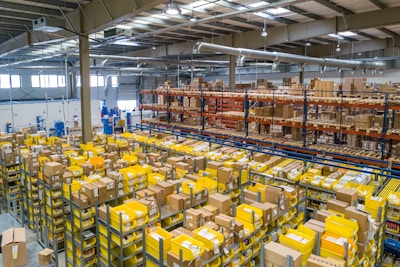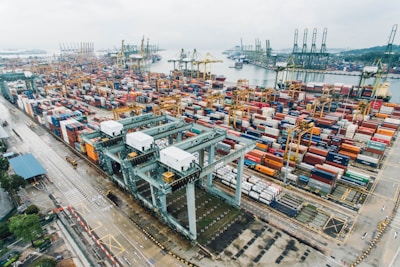
Warehouse management forms the operational backbone of international trading businesses, yet it's frequently treated as an afterthought compared to more visible activities like sales and sourcing. This oversight is particularly costly in international trade, where inventory investment is amplified by longer supply chains, multiple handoffs, and regulatory compliance requirements. In my 20 years helping companies optimize their international operations, warehouse management improvements consistently deliver the fastest and most substantial ROI among operational investments.
The complexity of international trade inventory distinguishes warehouse management in this sector from domestic operations. Products may pass through multiple warehouses across different countries before reaching end customers, each with its own handling requirements, cost structure, and regulatory obligations. Managing inventory across this distributed network demands systematic approaches that most small and medium trading companies lack when they first enter international markets.
Understanding Warehouse Operations for Import-Export
Import-export warehouse operations encompass receiving, storage, picking, packing, and shipping activities that transform inbound shipments into outbound deliveries. The rhythm of international trade creates distinctive operational patterns—containers arrive in concentrated bursts followed by processing periods, rather than the steady flow typical of domestic operations. This irregularity demands flexibility in labor planning and space allocation.
Cross-docking operations can significantly reduce handling costs and transit times for products destined for immediate dispatch. Rather than placing received goods into storage, cross-docking transfers them directly to outbound lanes, eliminating storage time entirely. This approach works best for high-volume products with predictable demand and standardized packaging.
Bonded warehouse utilization enables deferral of duty and tax payments until products leave bonded storage, improving cash flow for imported goods. Foreign Trade Zone designation provides additional benefits including duty elimination on re-exported products and inverted tariff treatment for domestic sales of transformed products. Understanding these options enables significant cost optimization.

Inventory Control and Stock Management
Inventory accuracy provides the foundation for effective warehouse management. Discrepancies between recorded and actual inventory trigger stockouts, overstocking, and customer service failures. Cycle counting programs—regular verification of inventory subsets rather than periodic full physical inventories—maintain accuracy while minimizing operational disruption.
ABC analysis prioritizes inventory management attention based on value contribution. 'A' items representing the top 20% of SKUs by value typically warrant 80% of management attention, while 'C' items with low individual value may justify simplified management approaches. This prioritization focuses resources where they deliver the greatest impact.
Safety stock calculations should reflect actual demand variability, supply lead time variability, and service level requirements. The common practice of applying uniform safety stock percentages across all products ignores the fundamental differences in demand predictability and supply reliability that determine actual buffer needs. Data-driven safety stock optimization reduces inventory investment while maintaining service levels.
Warehouse Technology and Management Systems
Warehouse Management Systems provide the operational foundation for modern warehouse operations, managing inventory locations, task prioritization, and workflow optimization. WMS selection should consider scalability, integration capabilities, and fit with your operational model. Cloud-based solutions have reduced implementation costs significantly, making sophisticated WMS accessible to smaller trading operations.
Barcode scanning and radio frequency identification enable accurate inventory tracking from receipt through shipment. These technologies eliminate transcription errors, enable real-time inventory visibility, and streamline receiving and shipping processes. The investment in scanning infrastructure typically pays for itself through improved accuracy and labor efficiency within 12-18 months.
Integration between WMS and enterprise resource planning systems ensures that inventory data flows seamlessly between operational and financial systems. This integration enables accurate financial reporting, efficient order fulfillment, and comprehensive business analytics that inform strategic decisions.
Space Optimization and Layout Planning
Warehouse space represents a significant cost driver, and layout optimization directly affects operational efficiency. Product flow patterns should minimize travel distances and eliminate unnecessary handling. Popular items should be positioned for easy access, while slower-moving inventory can occupy less accessible locations.
Vertical space utilization often goes underappreciated, with ceiling height remaining underutilized in many warehouses. Rack systems that extend to full warehouse height can dramatically increase storage density without requiring warehouse expansion. The investment in racking infrastructure typically offers attractive returns through improved space utilization.
Receiving and shipping dock optimization affects truck turnaround times and labor productivity. Adequate dock doors, proper staging areas, and efficient traffic flow patterns reduce truck waiting times that add cost without adding value. In markets where labor costs are high, reducing truck dwell time represents significant opportunity for cost reduction.
International Trade Compliance in Warehousing
Warehousing operations for international trade intersect with multiple compliance requirements that domestic operations typically don't face. Bonded warehouse regulations require physical separation, security measures, and recordkeeping that satisfy customs authority requirements. Non-compliance can result in penalty duties, warehouse license revocation, and loss of bonded storage privileges.
Product-specific storage requirements may apply to regulated products including food, pharmaceuticals, hazardous materials, and temperature-sensitive goods. These requirements often mandate specific equipment, monitoring systems, and handling procedures that significantly affect operational costs and facility requirements. Planning for regulated products requires early engagement with relevant regulatory authorities.
Record retention requirements for international trade transactions typically exceed those for domestic business, with documentation needed for years after transactions complete. Warehouse management systems should support extended record retention with appropriate indexing that enables retrieval when needed for audits, customer inquiries, or dispute resolution.
Third-Party Logistics Partnership Options
Third-party logistics providers offer warehouse management services that enable trading companies to access sophisticated capabilities without capital investment in owned facilities. 3PL relationships provide variable cost structures that scale with volume, avoiding the fixed cost burden of owned warehouses during growth phases or market downturns.
3PL selection should evaluate network coverage, service capabilities, technology integration, and financial stability. References from existing customers—particularly those with similar operational requirements—provide insight that goes beyond sales presentations. Service level agreements should specify performance metrics, remedies for non-performance, and clear escalation procedures.
Transition planning for 3PL arrangements deserves more attention than it typically receives. Data migration, process alignment, and staff training require careful coordination to prevent operational disruptions. I recommend planning for at least three months of transition, with parallel operations during the cutover period to identify and resolve issues before they affect customer service.
Warehouse management excellence in international trade requires balancing efficiency with the compliance, visibility, and flexibility demands that cross-border operations impose. Companies that invest in systematic warehouse management capabilities build operational foundations that enable scalable growth while maintaining the service reliability that customers expect.